CatSU welcomes Australian Embassy officials, highlights PAGLAOM Center and proposed KIST park
SDG 17: Partnerships for the Goals
March 26, 2026
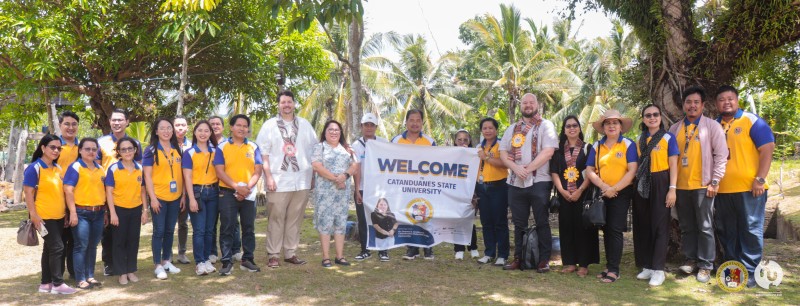
Underscoring opportunities for collaboration in education and sustainable development, Catanduanes State University (CatSU) showcased its key innovation and sustainability initiatives to officials from the Australian Embassy in the Philippines during a Familiarization Visit on Thursday morning, March 26.
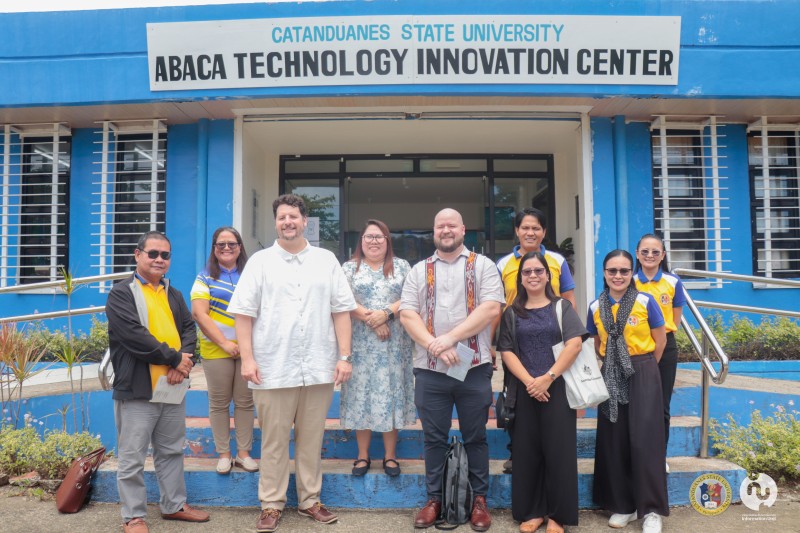
The delegation, composed of Counselor Luke Villiers (Economic and Public Diplomacy), Second Secretary (Economic) Lachlan Parsons, and Senior Program Officer (Economic) Mabellene Reynaldo, toured the Palnab Agro-Fishery Learning and Opportunities for Mangrove-based Eco-Tourism (PAGLAOM) Center, walked through the crab facility, explored the Abaca Technology Innovation Center (ATIC), and were introduced to the proposed Knowledge, Innovation, Science, and Technology (KIST) Park.
They were received by President Dr. Gemma G. Acedo along with key University officials.
The University President invited the delegation to participate in a mangrove planting activity as part of the University’s “one tree per visitor” initiative, expressing appreciation for the visit and optimism for future collaboration.
Vice President for Research, Extension, and Production Affairs Dr. Roberto B. Barba Jr. presented the PAGLAOM project, highlighting its role in advancing aquaculture, research, and eco-tourism in the province. He shared his vision of the project as a future regional hub that integrates environmental conservation, community development, and innovation.
Counselor Villiers expressed gratitude for the warm welcome.
“Thank you so much for this incredibly warm welcome. We heard before leaving Manila that Catanduanes is the Happy Island, and we certainly felt that the moment we arrived,” Villiers said.
He also shared that Australia is strengthening its engagement with Southeast Asia through its “Invested: Australia’s Southeast Asia Economic Strategy to 2040,” which aims to deepen economic ties in the region.
“We are working to build stronger connections, especially in key areas like agriculture and education,” he said, noting ongoing efforts to expand partnerships with institutions in the Philippines.
Villiers also introduced to the University deans, directors, and employees the Australia Awards scholarship program, which supports Filipino professionals in pursuing graduate studies in Australia.
“Each year, we support around 40 to 50 Filipinos to undertake master’s degrees, with the goal of bringing that expertise back to benefit their communities,” he added.
Second Secretary Parsons echoed the enthusiasm, looking forward to learning more about the University and the province’s programs in key sectors such as energy, infrastructure, and connectivity.
“We are excited to be here and learn more about what CatSU and the province are working toward,” he said since their visit was organized by the Provincial Local Government of Catanduanes.
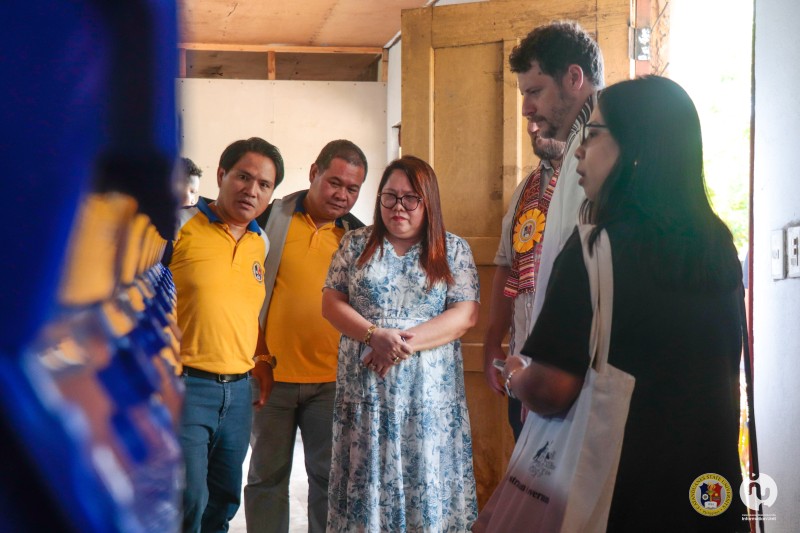
The half-day activity continued with the signing of the PAGLAOM commitment wall and a mangrove planting. While exploring the ATIC, the delegation was introduced to various abaca-based products, including alcohol and soap, and they even tried abaca wine.
The visit concluded with a meet-and-greet at the CatSU Conference Room, where the University President presented the proposed KIST Park and later offered a token of appreciation to the visitors—a small wooden clock shaped like Catanduanes Island.