

CatSU beefs up push for global competitiveness in IZN Orientation 2026
SDG 17: Partnerships for the Goals
March 25, 2026
Catanduanes State University (CatSU) reaffirmed its commitment to global engagement during the Internationalization Orientation 2026 held Tuesday morning, March 24, at the CatSU Accreditation Room.
The conversation on internationalization (IZN) opened with opening remarks of VPREPA Dr. Roberto B. Barba Jr., representing President Dr. Gemma G. Acedo, who pointed out how global engagement has become a growing trend in higher education.
“The university stands at the intersection of local responsibility and global relevance,” he expressed.
Speaking on behalf of Vice President for Academic Affairs Dr. Kristian Q. Aldea, College of Industrial Technology Dean Dr. Edwin Romero expressed that universities today are defined by more than their physical campuses.
“The value of a university is not solely measured by its walls. It is in its fluidity—how far its influence can reach and how it connects beyond borders,” Dr. Romero said.
He added that global rankings are no longer just about prestige, but about real-world impact.
“These rankings reflect a university’s ability to attract talent, secure research funding, and produce graduates who can thrive anywhere in the world,” he noted.
He also emphasized that internationalization serves as a bridge for both students and faculty.
“It gives them the confidence to step into the global arena. Our goal is clear: we are not just building a local leader—we are shaping a global contender,” CIT Dean concluded.
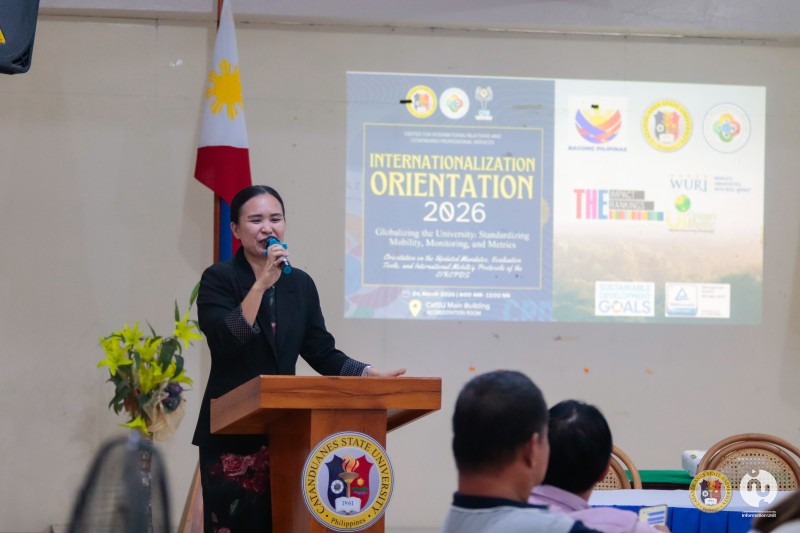
Planning Officer III Ar. Mae Lizza D. Bublo reinforced this direction by grounding it in policy and institutional requirements. She explained that under the proposed revised State Universities and Colleges (SUC) Levelling Instrument, internationalization is now a measurable and essential component of university performance.
“IZN is no longer optional. For universities like CatSU, it’s a requirement—up to 18 points under Key Result Areas 1 and 2,” Ar. Bublo stressed.
Financial considerations were also addressed, with discussions anchored on Executive Order No. 77, s. 2019, which standardizes government travel policies.
Chief Administrative Officer Rommel S. Torres, Accountant III Alma B. Santos, and Budget Unit Head Maryshiel S. Tabios outlined guidelines to ensure that official local and foreign travel remains necessary, cost-effective, and compliant.
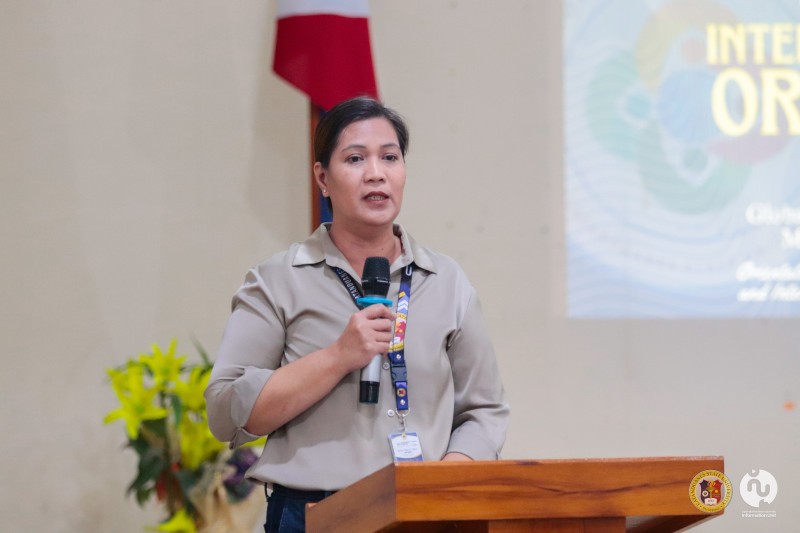
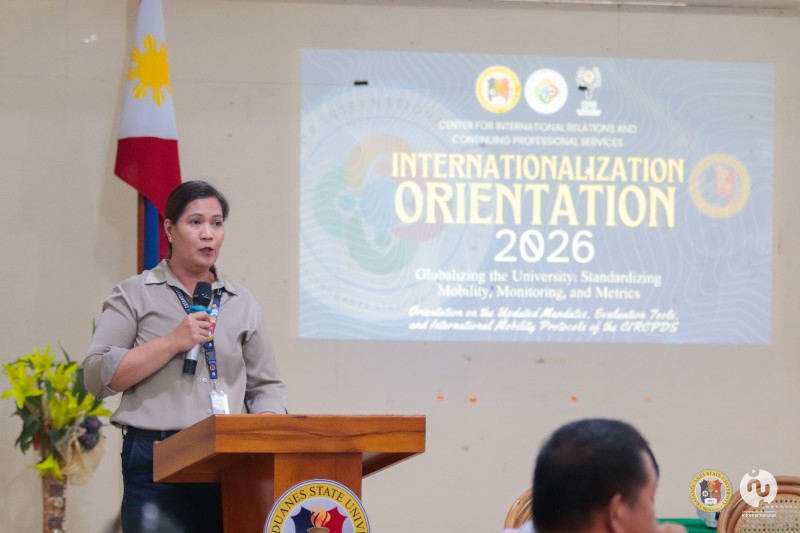
Leading the overall initiative, Center for International Relations and Continuing Professional Development Services (CIRCPDS) Director Zyra Mae T. Tumala guided participants through the practical side of internationalization. Her session covered university rankings, evaluation systems, and the process for foreign travel requests for both personnel and students.
She also clarified the documentary requirements needed for efficient endorsement to the Commission on Higher Education (CHED), helping streamline processes for future international engagements.
The event gathered university leaders, including deans, directors, and unit heads, alongside key officials such as CAO–Administrative Atty. Gregorio M. Sarmiento Jr. and Vice President for Administrative and Financial Affairs Dr. Arthur I. Tabirara.